Bathroom renovation checklist for Sabah homes
A practical bathroom renovation checklist: waterproofing, falls to drain, plumbing, ventilation, vanity and storage, lighting, fittings and the right order of work.
Short answer
A good bathroom renovation starts behind the tiles: sound waterproofing, floors that fall properly to the drain, plumbing checked before it is covered, and ventilation that clears humidity. Then plan the vanity, storage, lighting and fittings around how you use the room, and follow a sensible order of work so nothing has to be undone.
Start with how you use the room
Before choosing tiles, think about who uses the bathroom and when. A master bathroom shared by two people at the same time needs different storage and basin space from a guest bathroom or a children's bathroom.
Note what annoys you about the current bathroom: water pooling, a musty smell, nowhere to put toiletries, poor light at the mirror. Those are the problems your renovation should solve first.
Waterproofing
Waterproofing is the most important part of a bathroom renovation and the one you cannot see afterwards. Poor waterproofing can lead to leaks into neighbouring rooms or the unit below, which is especially serious in condominiums.
- Ask how the floor and shower walls will be waterproofed and how high the membrane will go.
- Check that corners, floor-wall joints and pipe penetrations are treated.
- Ask whether a water test is done before tiling.
- Keep a record of what was done for future reference.
Falls to drain
Floors should slope gently towards the floor trap so water drains away instead of pooling. This is especially important in the shower area and where the shower meets the dry zone.
Linear drains, step-downs and screens can help keep water in the shower. Discuss the layout at the site visit, as existing floor levels and drain positions affect what is practical.
Plumbing
Check the condition of existing pipes, water pressure and the positions of supply and waste points before anything is tiled over. Moving a toilet or floor trap is more involved than moving a basin, so decide early.
- Confirm positions for the toilet, basin, shower and any bathtub.
- Plan water heater location and power supply.
- Include isolation valves so fittings can be serviced later.
- Test for leaks before walls and floors are closed up.
Ventilation
In Sabah's humidity, a bathroom without good airflow stays damp, which encourages mould and shortens the life of cabinets, grout and fittings. A window helps, but many bathrooms, particularly in condos, need an exhaust fan.
Plan the fan position so it pulls moist air from the shower area, and make sure it vents to the outside or an approved duct.
Vanity and storage
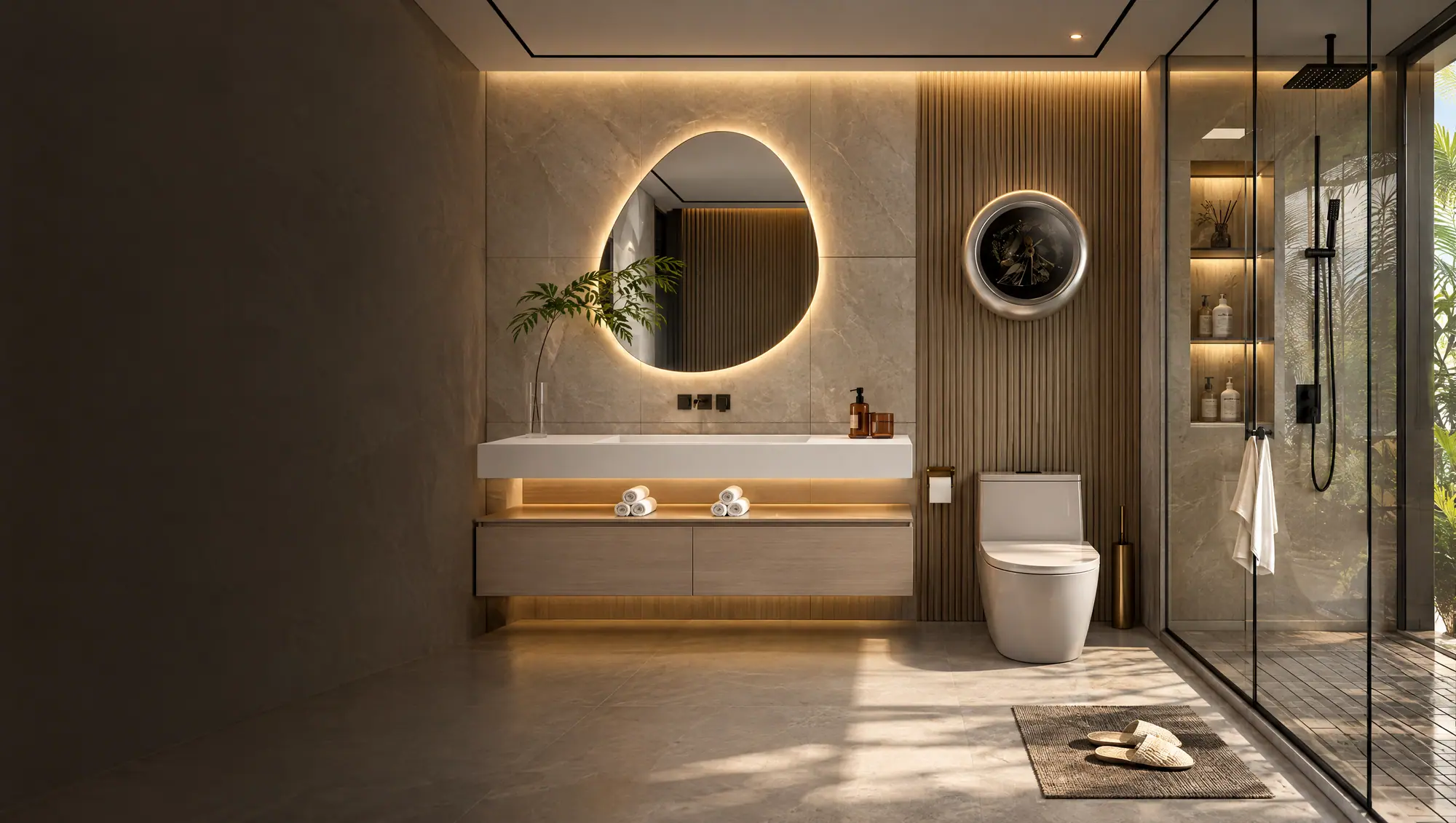
The vanity cabinet sits in the dampest room in the house, so materials, edge sealing and hardware matter. A wall-hung vanity keeps the floor clear for cleaning and away from standing water.
Plan storage for what you actually keep in the bathroom: towels, toiletries, cleaning products, hair dryers. Mirror cabinets, niches in the shower wall and drawers inside the vanity keep surfaces clear. Cabchen designs and builds vanities and bathroom storage as part of its bathroom renovation service.
Lighting and power
Layer your lighting: general ceiling light, good even light at the mirror for grooming, and softer light for evenings. Place light at the mirror to avoid shadows on your face.
Power points for hair dryers, shavers or a mirror demister should be positioned safely and suited to bathroom use. Have a qualified electrician confirm the details.
Fittings and finishes
Choose taps, shower sets, toilets and accessories from reliable suppliers, and keep the model details for servicing later. Slip resistance matters for floor tiles, especially in the shower.
Larger tiles mean fewer grout lines to clean, while textured tiles give better grip underfoot. Grout and sealant choices also affect how easy the bathroom is to keep clean in humid conditions.
The right order of work
A sensible sequence avoids damage and rework. Your contractor will set the detailed schedule, but the general order usually looks like this.
- Protect other areas, then remove old fittings and finishes.
- Rough-in plumbing and electrical points.
- Screed floors with correct falls to the drain.
- Apply waterproofing and test before tiling.
- Tile walls and floors, then grout and seal.
- Install vanity, mirror, sanitaryware, fittings and lighting.
- Final checks for leaks, drainage and function, then clean and hand over.
Questions to ask your contractor
Clear answers to these give you confidence before work starts.
- How will waterproofing be done, and is it tested before tiling?
- Who handles plumbing and electrical work?
- What vanity materials and hardware do you recommend for damp areas?
- How long will the bathroom be unusable?
- What warranty applies, and is it confirmed in writing?
Common questions